
More than 2.5 billion people need at least one assistive product.
That’s a tool like a hearing aid, a wheelchair or a screen reader.
And nearly 1 billion of them are denied access, according to a 2022 release from the World Health Organization and UNICEF.
Deafblind people (people who have both sight loss and hearing loss) are part of that count.
So what does the right tool look like for them?
For many, it works through touch.
At RHEMA we build wearables that turn speech into touch patterns.
So we read the WHO’s guidance closely, along with the sessions at the 2026 Deafblind UK conference.
Table of Contents
- What is assistive technology, and how many people go without it?
- What is the ICF, and where does touch fit?
- What is the WHO GATE 5P framework?
- Where does a wearable fit in all of this?
- Real Questions About Assistive Technology and Touch, Answered
What is assistive technology, and how many people go without it?
The WHO calls assistive technology “an umbrella term for assistive products and their related systems and services.”
In other words, it covers the product and the training and support that make it usable.
Its fact sheet (January 2024) says the need is heading for 3.5 billion people by 2050.
And access is pretty uneven.
As few as 3% of people in some low income countries have the products they need, compared with 90% in some high income countries.
What are assistive products?
Think of the items themselves: a hearing aid, a braille display or a vibrating wearable.
The WHO says they help maintain or improve functioning in areas like communication, hearing, vision and mobility.
Take hearing. Hearing aid production meets less than 10% of global demand, per the same fact sheet.
And what about cost? The WHO and UNICEF found that around two thirds of people who have assistive products pay for them out of pocket.
So for many families, the price decides everything.
Now think about a deafblind person. The gap isn’t just a missing gadget.
A screen or a sound alone can’t carry the message, and that’s where touch comes in.
What is the ICF, and where does touch fit?
The ICF is the WHO’s International Classification of Functioning, Disability and Health.
Basically, it’s a standard way to describe how a health condition affects daily life.
All 191 member states endorsed it on May 22, 2001.
And it deliberately counts the world around a person, not only the person’s body.
How did a conference speaker explain it?
Dr. Walter Wittich, of the Université de Montréal, used assistive technology as his example.
In the ICF, a tool is an environmental factor. It changes how well a person can communicate.
And the ICF counts communication as part of participation in everyday life.
His team has also built ICF Core Sets for deafblindness, which are shorter lists of codes for describing what matters most.
They come in 3 sizes: 218 codes for service and policy planning, 137 in the middle, and a brief set of 33 for one on one assessment.
Then he showed how touch appears in the core set at every level.
It starts with plain sensation, such as vibration and temperature.
Then it moves to learning braille, to conversation and turn taking, to relationships, and finally to the environment, where he named devices that vibrate to pass on information.
So a service can now describe what touch does for a person in the same standard language that health systems already use.
Wittich added that partners are using the sets with politicians in Spain.
And a collaborator in Poland is lobbying the government, because deafblindness is not yet recognized there as a disability.

What is the WHO GATE 5P framework?
GATE is the WHO’s Global Cooperation on Assistive Technology, a network of over 2,500 members from 135 countries.
Its 5P framework names 5 areas that all need action: People, Policy and finance, Products, service Provision and Personnel.
So why does that matter? Because a product alone is never the answer.
A device nobody is trained to teach, or nobody can pay for, helps no one.
How do the 5 Ps apply to touch technology?
Let’s take them one at a time, using what the conference and the research say.
People and Policy
Steve Rose, a deafblind consultant, told the conference that successful design means including people with deafblindness in both the problem and the solution.
That’s a fair rule for any assistive technology for deafblind people.
And the WHO and UNICEF say the same thing. Recommendation 4 of their ten is to actively involve users of assistive technology and their families.
Policy matters here too, and it can even block touch itself.
Dr. Clare Manford, of the Deafblind UK Centre for Education and Research at Birmingham City University (the UK’s only academic hub focused solely on deafblindness), told the conference that research she found shows only 30% of teachers feel able to use touch for fear of accusations.
Yet 92% view touch positively.
Her team is now running a project on how professionals use touch in deafblind practice, to write guidelines for it.
Products
A 2023 review in IEEE Transactions on Haptics found that for communities such as the deafblind, the system has to work in both directions.
In other words, users need to send and receive language. It also says devices built for that need have yet to achieve commercial success.
But can touch really hold that much detail? Dr. Jude Nicholas described a study where 25 blindfolded people explored 168 objects for an hour.
They remembered 94% of them, and still remembered 85% a week later.
Now, that was memory for objects, not language. So it shows touch can carry detail, not that any one device works.
Provision and Personnel
The WHO and UNICEF release reports a 70 country survey with large gaps in services and trained workers, especially for communication.
So even a great device can sit in a drawer if no one nearby knows how to teach it.
Why does training belong in the product?
The same IEEE review points out that learning and keeping a language through touch takes extensive training.
So any tactile device for deafblind communication needs people who can teach it.
And it needs families who are supported while they learn.
Where does a wearable fit in all of this?
Wearable assistive technology is one product inside the 5 Ps. And it only counts if the other four are in place.
What is the RHEMA platform?
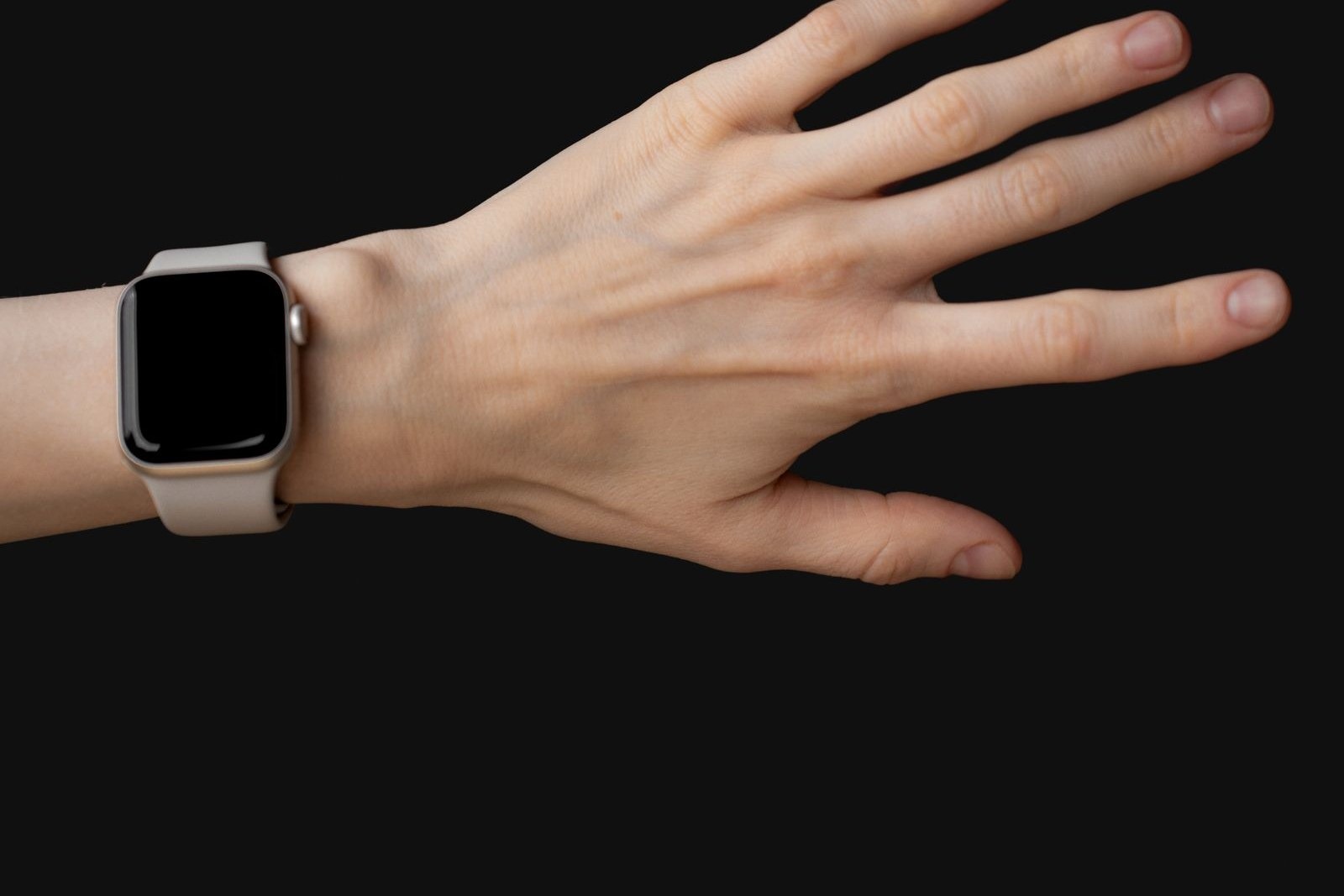
RHEMA’s core technology turns speech into structured tactile patterns on a wrist worn device.
Those are standardized vibration families, pulse durations and timing relationships.
Users learn the patterns through training and repetition. And local processing reduces dependence on a constant internet connection.
The platform is built to be shared. The same core can support wearables, learning tools and research tools, so a single touch technology can serve different people.
Our video demos show early work, including a tactile class demonstration with deaf children in Chennai, Tamil Nadu, and first time trainees learning tactile patterns.
They’re early demonstrations, so we don’t present them as proof of results.
Where could one platform be used?
Our site lists applications such as hearing accessibility, deafblind communication, education, healthcare, and discreet alerts in noisy workplaces.
Within those, we are exploring a classroom version where touch cues carry selected instructions and vocabulary.
We are also looking at a music version that turns rhythm into vibration, a version for older adults with hearing or vision loss that handles alerts and reminders, and a workplace version with programmable phrases.
These are directions in development, not finished products.
Touch back to speech or text is a direction too.
And that IEEE review is a fair reminder of how hard two way tactile communication is.
We should be clear about our limits. RHEMA is an evaluation model, with a supervised, parent guided process.
It is not a medical device, a hearing aid or a guaranteed communication solution.
So next time someone shows you a device, ask where each of the 5 Ps sits. And if you’d like to put the same questions to us, send them our way, or watch the demos first.
Real Questions About Assistive Technology and Touch, Answered
What does the WHO mean by assistive technology?
It means assistive products plus their related systems and services. The WHO’s January 2024 fact sheet describes it as an umbrella term, and says assistive products help maintain or improve functioning in areas such as communication, hearing and vision.
How many people need assistive technology?
More than 2.5 billion people need at least one assistive product, and the WHO expects 3.5 billion by 2050. The WHO and UNICEF’s May 2022 Global Report on Assistive Technology is a 140 page study that came out of the 2018 resolution WHA71.8.
What are the ICF Core Sets for deafblindness?
They are lists of codes for describing functioning in deafblindness. Dr. Wittich said they come as a comprehensive set of 218 codes, an intermediate set of 137 and a brief set of 33 for one on one assessment.
What do the 5 Ps in the WHO GATE framework stand for?
They stand for People, Policy and finance, Products, service Provision and Personnel. The WHO says reaching everyone who needs assistive technology takes action in all 5 areas.
Do tactile devices work for deafblind people?
The evidence is still early. A 2023 IEEE review says deafblind users need two way systems, that devices for this need have yet to achieve commercial success, and that learning a language through touch takes extensive training.
Is RHEMA a medical device or a hearing aid?
No. RHEMA is an evaluation model, not a medical device, not a hearing aid and not a guaranteed communication solution. The parent evaluation is supervised and parent guided.
Which WHO recommendation is about involving users?
It is recommendation 4 of the 10 in the 2022 WHO and UNICEF report: actively involve users of assistive technology and their families. Steve Rose made the same point at the 2026 Deafblind UK conference.